

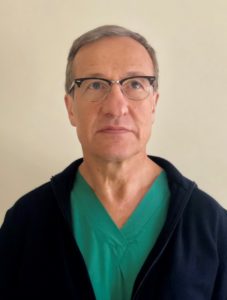
 Professor Dominico D’Ugo, MD
Fondazione Policlinico Universitario A. Gemelli
What are the unique challenges your institution faced since being confronted with the pandemic?
The Fondazione Policlinico Universitario A. Gemelli has been a “mixed” hospital (COVID-19 and non-COVID-19 patients) since the beginning of the pandemic in Rome. The first challenge was the structural and architectural change aimed to prepare for the increased influx of SARS-Cov-2 patients needing management, hospitalization and/or access to the intensive care units (ICUs). Dedicated COVID spaces were settled for emergency care, in-ward and ICU stay. Moreover, dedicated radiology rooms and dedicated operating rooms were settled. Altogether, all the involved personnel had to be updated and underwent extensive training on the use of individual protection devices and on the management of SARS-Cov-2 positive patients. A second big challenge related to the status of a mixed hospital was the increasing need to standardize and speed the transportation and management of COVID patients. Indeed, we realized that often these patients suffered delays in transportation and/or in the execution of needed procedures because a parallel priority was to avoid contamination of common spaces and minimize interhuman transmission. This was particularly true for the settlement of the COVID operating rooms before and during surgery. In this case, the surgical material had to be placed outside the operating rooms and a filter zone had to be created to deliver it safely.
A third challenge was to determine which patients had to be considered for admission in the COVID pathways. Indeed, many patients with fever at admission (including patients with abdominal infections) and pneumonia from other causes had to be included in these pathways for safety reasons, until the SARS-Cov-2 nasopharyngeal swab tested negative twice. Other patients with negative swabs but suggestive clinical presentation or suspect chest CT scan had also to be included. Last, patients with documented contacts with SARS-Cov-2 patients had to be managed with isolation measures as well.
As a fourth challenge, the ordinary activity inevitably decreased, with the shutdown of outpatient services and of some of the elective operating rooms. The management of elective patients needing short-term attention was initially difficult to organize, and we feared delays may be caused in the treatment of such patients (especially surgical oncology patients).
How did hospital administration tap into surgical oncology staff to support COVID-19 patients?
Hospital resources were extensively devolved to treatment of COVID patients. Many surgery wards were merged to leave room to COVID internist wards. Some of the operating blocks and post-surgical ICU units were assigned to the treatment of COVID patients. This had an inevitable effect on the availability of resources in terms of operating rooms and possibility for patients with a need for postoperative intensive-care assistance (i.e. patients with comorbidities or elderly patients) to undergo surgery. In regards to the direct involvement of surgical oncologists in the treatment of COVID patients, the hospital administration alerted all the personnel that they could be recruited for the management of COVID patients and asked for volunteers. Some elective surgeons had more direct involvement, due to the need for consultations, (i.e. thoracic surgeons) but for most of the surgical oncology staff, there was no reassignment to the COVID wards. The only assignments at risk for contact for most surgical oncologists were the nights on-call (in which surgeons of the surgical oncology area rotate), where the surgeon had to evaluate both patients in the non-COVID and COVID pathways.
How has the pandemic changed your cancer patient treatment regimens? Have you had to delay many surgeries?
In regards to the multidisciplinary treatment of cancer patients, we had initial limitations in the organization of tumor boards, which were overcome with the use of online meetings and calling software with minimal impact on the decision process. In the operating room, following the recommendations developed by many surgical societies, we had to modify the setting to avoid exposure to surgical smoke and biological fluids (i.e. with the use of closed insufflation/desufflation systems, implementing the individual protection devices available).
In regards to the surgical oncology activity planning, we initially feared a possible delay in the surgical treatment of cancer patients due to the reduction of available beds and of the active operating rooms. For this reason, we rearranged the surgery waiting list, focusing it almost exclusively on the treatment of surgical oncology patients. This allowed us to maintain a standard surgical oncology activity with no significant delays. We had serious difficulties in bed management due to the merging of the surgical wards, and difficulties in the outpatient evaluation of surgical oncology patients, due to the initial shutdown of the outpatient clinic. However, overall, we were able to organize the activities in a satisfactory manner. All this required a very thoughtful organization that had to be renewed on almost a daily basis, due to the oscillations in the number of admitted COVID patients and to the consequent variable employment of the hospital and personnel resources.
What is your current case volume (%) of cancer surgeries and what type of procedures are you doing? Where do you think you are on the curve – and how do you see it changing over the coming weeks?
Compared to the previous trimester, we had no significant shift in the treatment of cancer patients. However, due to the shutdown of many services (i.e. the endoscopy for a certain period, the surgery clinic) and the encouragement for the population to stay at home, as well as the generalized fear against hospitals and especially mixed hospitals during the pandemic, patients’ recruitment has certainly diminished. For this reason, we expect a decrease in the surgical oncology activity at least for the next month. Afterwards, we expect a notable increase in activity, even though we fear we might observe a significantly higher number of advanced patients due to the previously described delays.
Can you share some of the personal and professional challenges you have faced during these unprecedented times?
Two things struck me emotionally the most:
- The previously unexperienced fear of being treated in a Hospital during pandemic times, with difficulties in convincing cancer patients who were on the waiting list for life-saving treatment.
- The unpredictable effect of isolation (relatives’ visits not allowed) in patients recovering from surgery: less psychological impairment was observed after major surgery or complicated cases, whilst plain recoveries were frequently affected by panic and sometimes suicidal thoughts.